TURNING EMISSIONS INTO RENEWABLE NATURAL GAS
Standard Carbon converts carbon emissions and wasted electricity into pipeline-grade renewable natural gas that works seamlessly in existing infrastructure. No retrofits, no disruption. The system is already operating, with $75M+ in signed deployment contracts, a projected $1.7B commercial pipeline on the horizon.
Standard Carbon has “cracked the code” and can produce clean, low-carbon gas locally from waste at massive scale… designed to scale nationally and globally.




Why Invest in Standard Carbon?
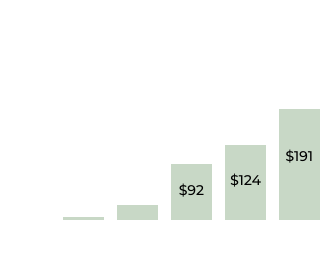
$191M
In projected revenue by 20291
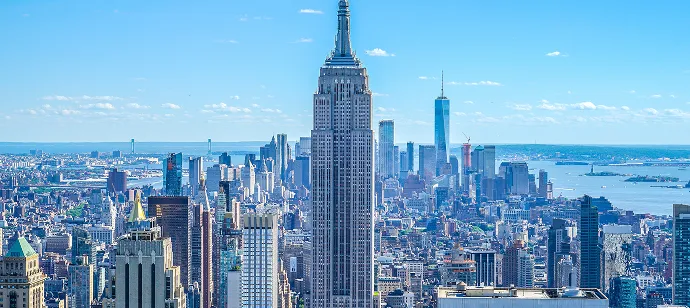
Fully Operational NYC deployment at CCNY
6X+
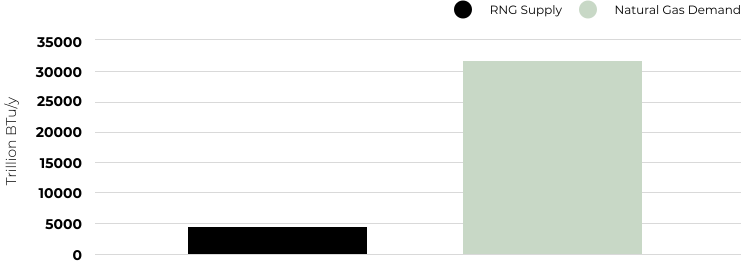
Natural gas needed to meet 2040 demand2
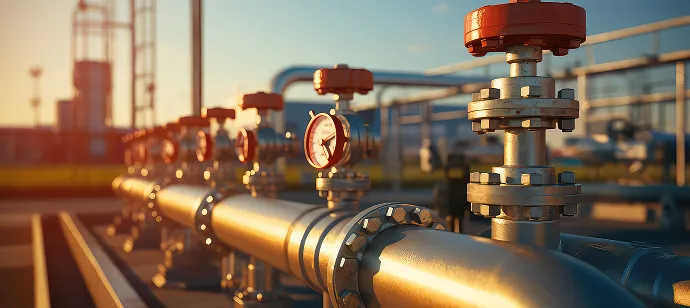
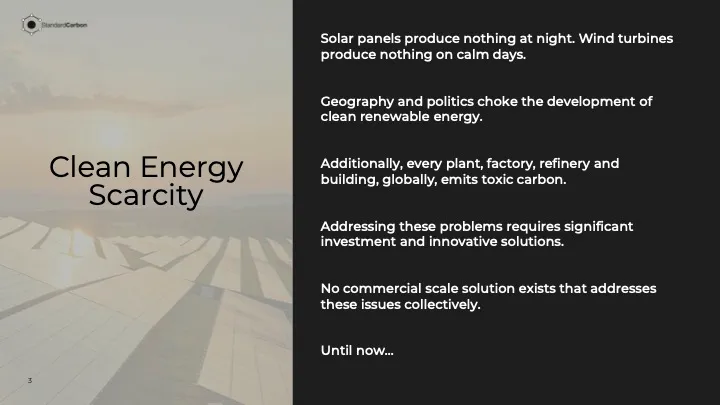
THE $15+ TRILLION ENERGY INDUSTRY CAN’T MEET THE DEMAND FOR CLEAN FUEL
The $15T3 global energy system emits 34B tons of CO₂ every year. We convert that CO₂ into low‑carbon Renewable Natural Gas (RNG), a drop‑in replacement for fossil gas that runs on existing infrastructure and scales to close a 6x+ projected supply gap by 2040.

Producing Natural Gas from Emissions and Excess Power
Turning Carbon Emissions Into Clean, Usable Energy
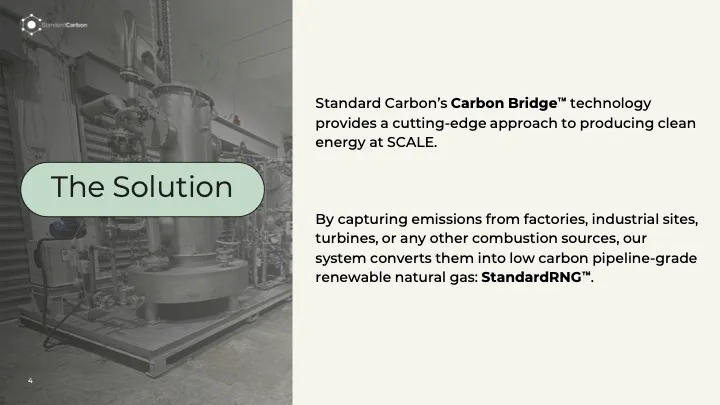
Our Carbon Bridge™ system turns CO₂ waste into a pipeline-grade natural gas we call StandardRNG™.
Our Carbon Bridge™ system turns CO₂ waste into a pipeline-grade natural gas we call StandardRNG™. Produced by smokestacks and wasted power at existing energy and industrial sites, this clean fuel will support existing energy infrastructure that powers cities, campuses, and industries, cutting carbon without costly upgrades. Now, what was once a liability is an energy solution, and clean RNG can be produced at scale directly where it’s needed.
OPERATING DEPLOYMENTS ACROSS MARKETS AND GEOGRAPHIES
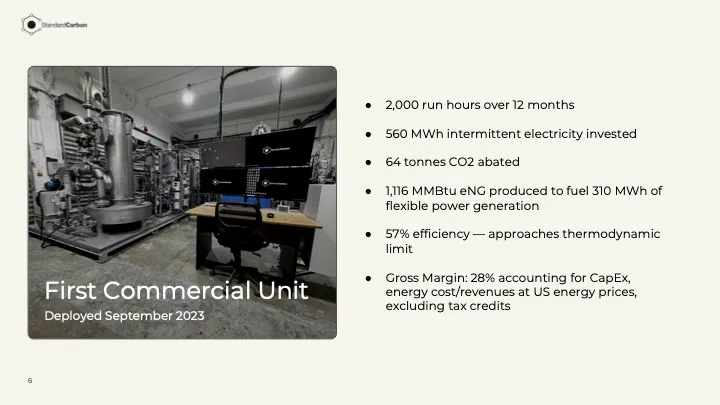
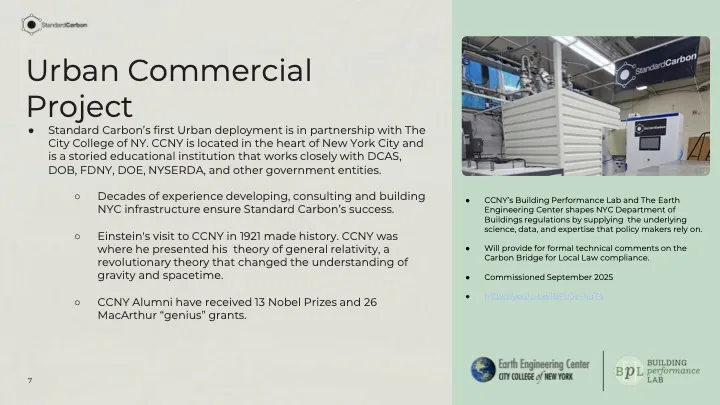
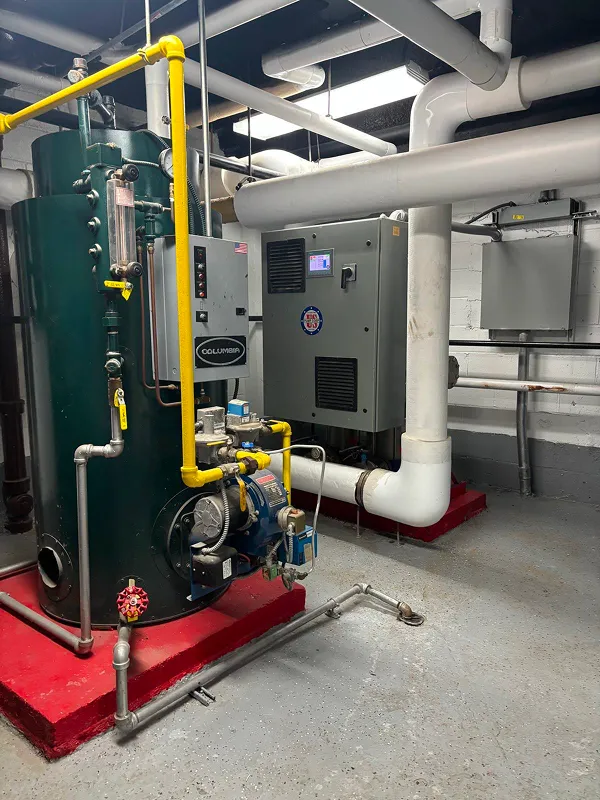
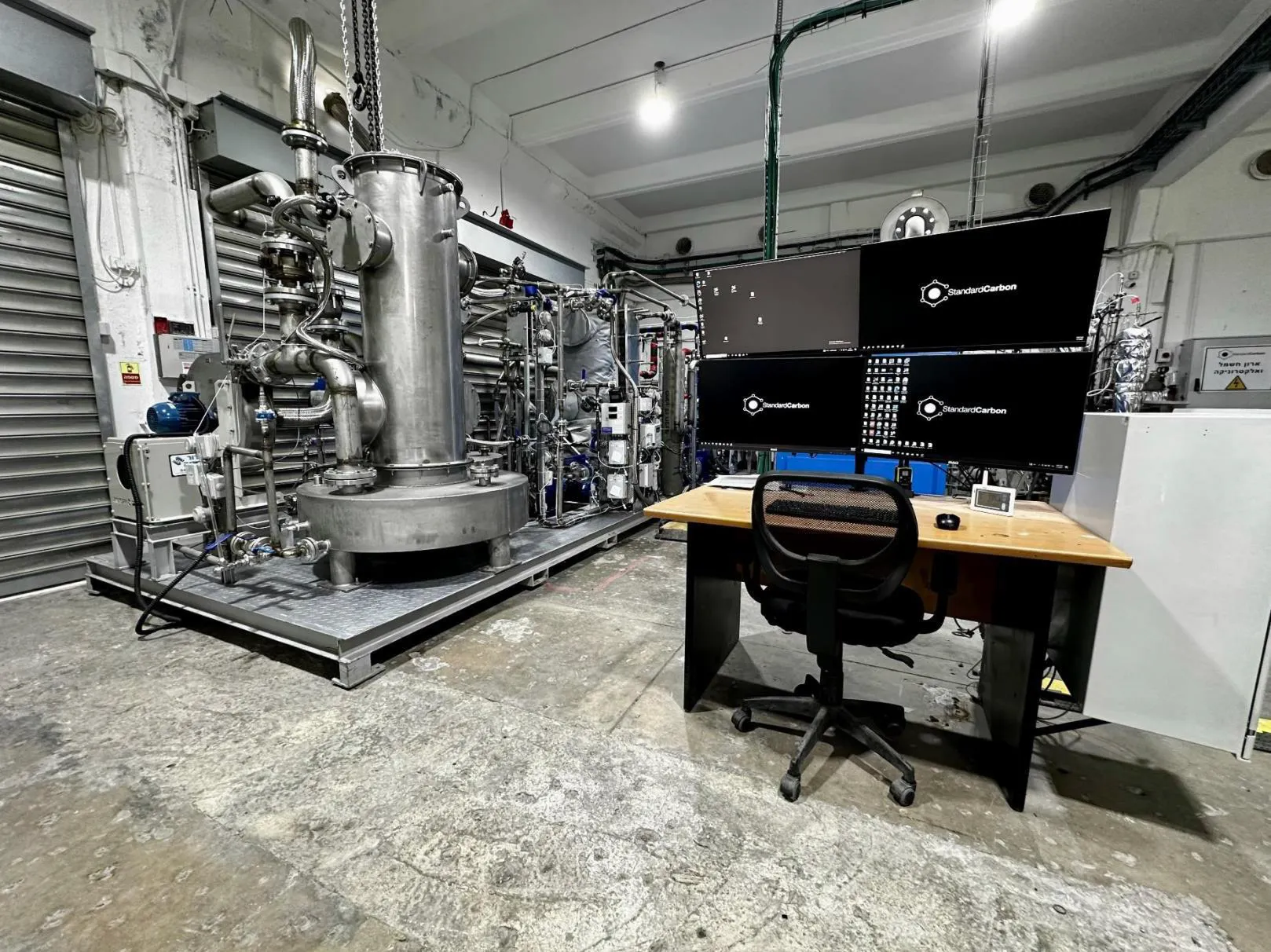
Standard Carbon’s Carbon Bridge™ has moved from pilot to commercial deployment, with systems operating and under construction across dense urban environments, utility-scale power generation, and industrial energy infrastructure in multiple countries.
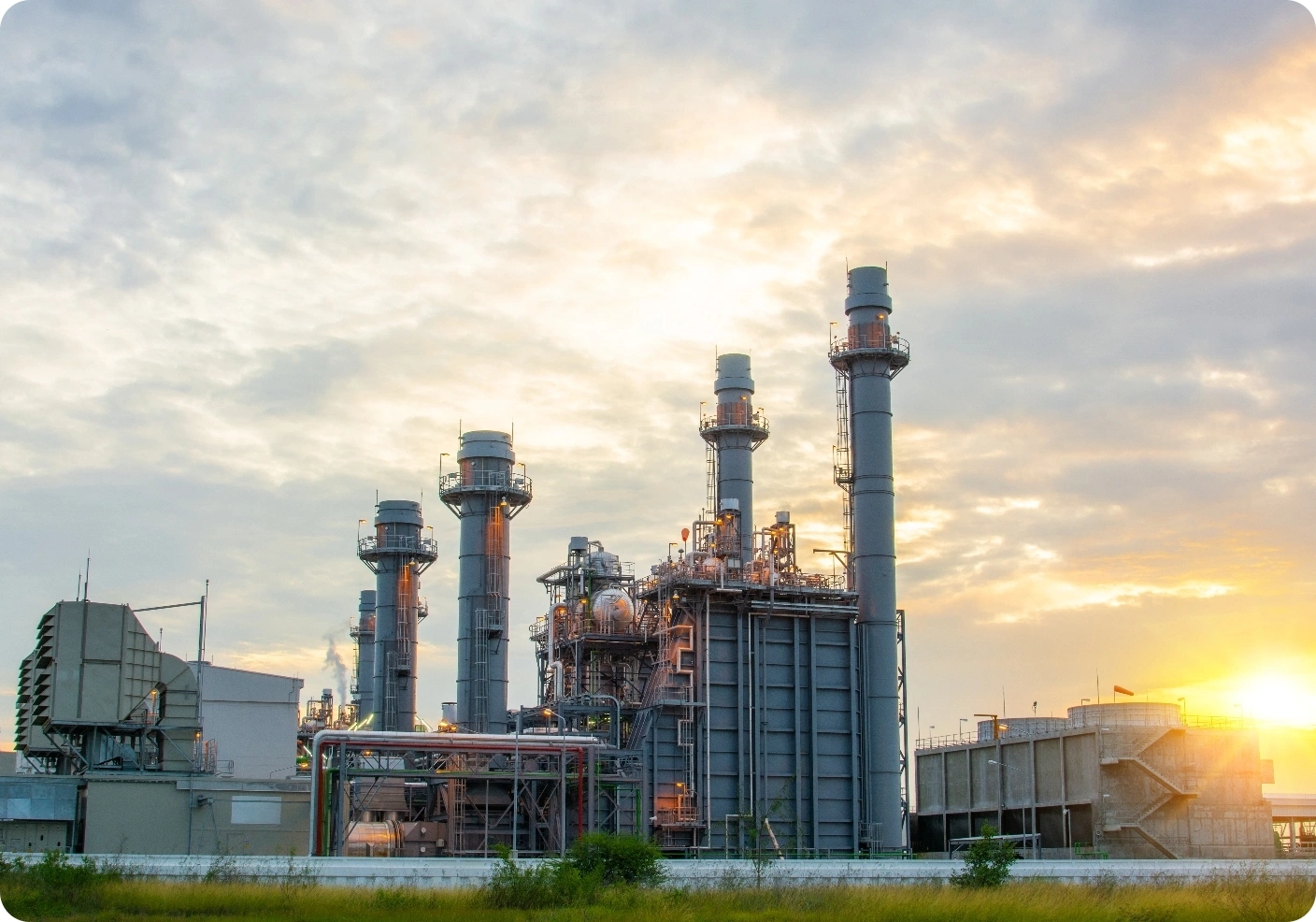
The technology is live in New York City, one of the most demanding regulatory and infrastructure environments in the world, and is expanding into utility-scale deployments in the U.S. and the Middle East, validating performance across radically different operating contexts. These projects demonstrate that the system scales from urban, behind-the-meter installations to national grid–connected power stations.
Commercial momentum is already established:
2,000+
cumulative operating hours
60+
tonnes of CO₂ converted
1,100+
MMBtu of pipeline-grade natural gas produced
Together, these deployments, contracts, and performance metrics confirm a validated technology with clear demand across multiple verticals and geographies—establishing a strong foundation for scaled rollout in the U.S. and internationally.
OUR PLAN TO GROW TO $191M IN REVENUE BY 2029
We’re scaling fast to meet surging demand. With 40+ signed deals and a growing pipeline of large-scale projects, we project over $1.7B in deployments and $191M in revenue by 2029. Driven by expanding commercial adoption, repeat customers, and improving unit economics across gas, services, and incentives, we aim for up to 85X revenue growth before 2030.
How Carbon Bridge™ Works
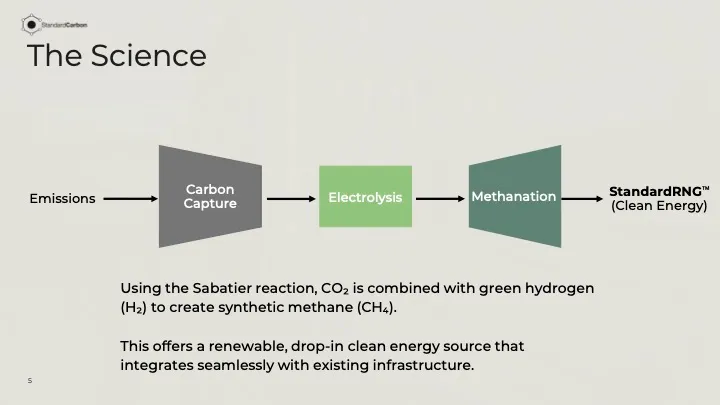
Carbon Bridge™ converts emissions and excess electricity into pipeline-grade
low-carbon natural gas—directly at the source.
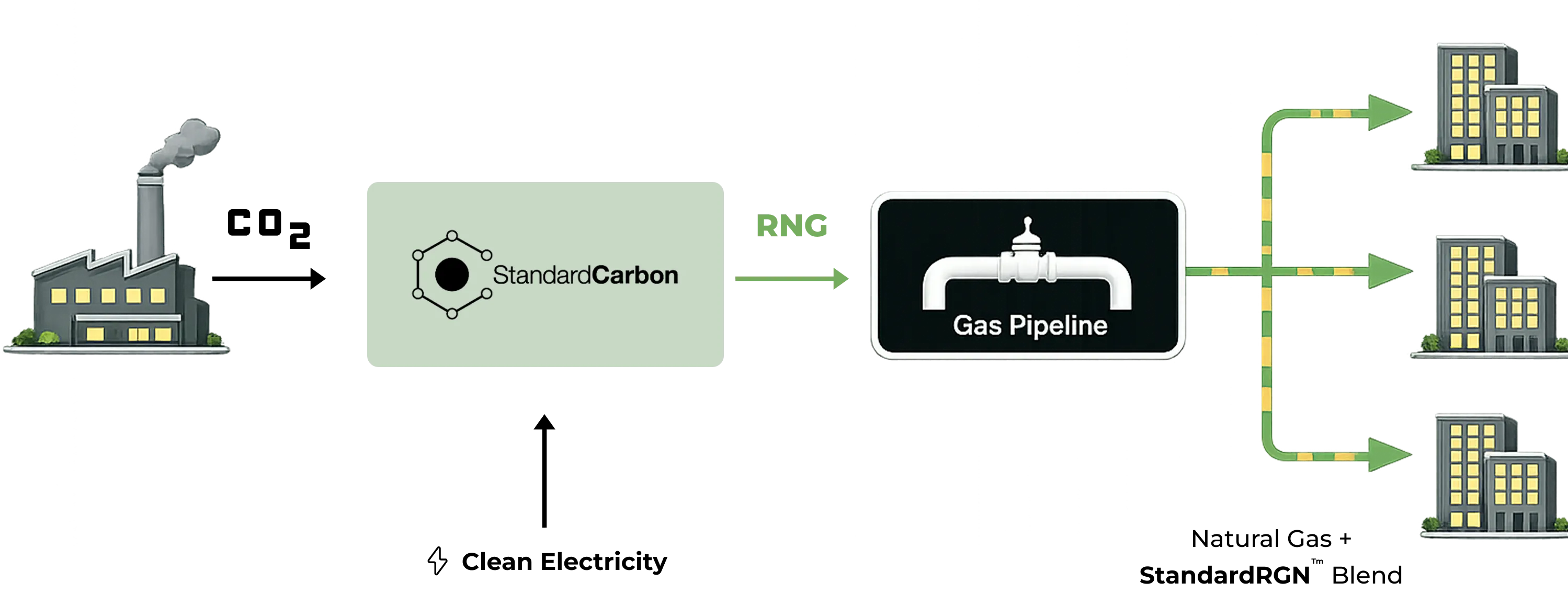
Capture CO₂ at the Stack
CO₂ is captured from exhaust before it enters the atmosphere.
Store Carbon, Wait for Cheap Power
Captured CO₂ is stored on-site until low-cost, off-peak electricity is available.
Convert Power into Fuel
Excess electricity is used to produce hydrogen from water.
Synthesize Natural Gas
Hydrogen and CO₂ are combined to produce StandardRNG™—ready for pipelines, generators, and boilers.
The Global Push to Reach Net-Zero by 2050
With the International Energy Agency (IEA) setting the ambitious goal of net-zero emissions by 2050, governments are mandating deep carbon cuts across cities, campuses, and industry.
NYC’s Local Law 97 now fines buildings $268 per excess ton of CO₂7

Industrial firms face $1B+ in compliance costs under new global climate rules8
Japan’s government is pushing for 46% reduction by 2030, with a focus on carbon credits9
EU mandates the blending of low carbon natural gas into all natural gas supplies10
How Standard Carbon Makes Money11
Revenue comes from a diverse mix of activities across each project lifecycle, generating income upfront, during operation, and through environmental incentives:
Upfront reservation and engineering fees that secure and design new systems
Feasibility studies that assess project viability and prepare sites for deployment
Sales of renewable gas produced on-site or delivered through pipelines
Ongoing operations and maintenance fees tied to system performance
Captured tax incentives and carbon credits that reward emissions reductions
LED BY EXPERTS IN ENERGY, TECHNOLOGY, AND SCALED DEPLOYMENT
Standard Carbon's management team has deep expertise across energy systems, infrastructure development, manufacturing and commercial scaling.
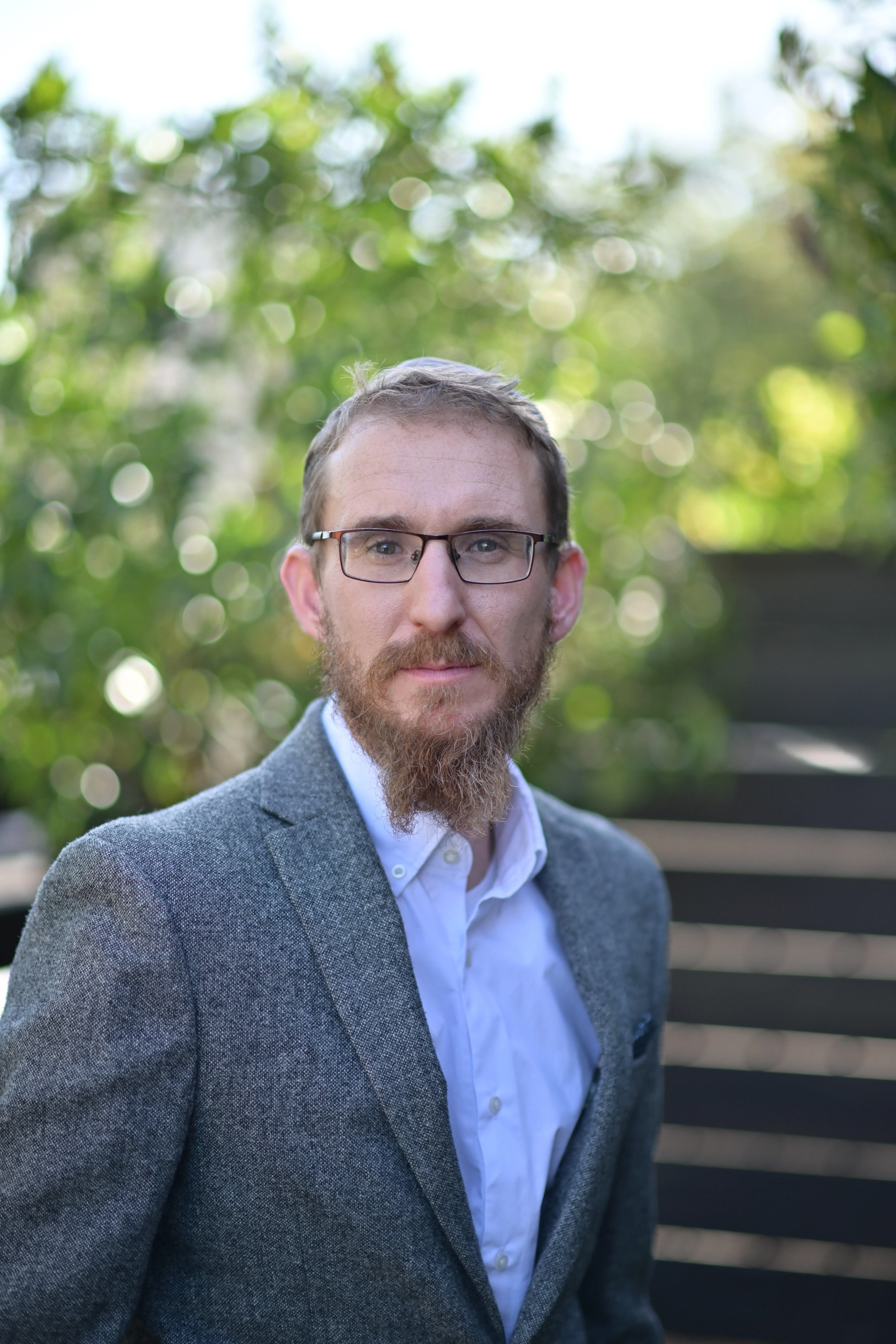
• Founded Standard Carbon to transform CO₂ emissions and wasted electricity into renewable natural gas.
• Licensed professional engineer with BS/MS degrees in Environmental Engineering from Columbia University
• Leads strategy in integrating system architecture with policy, engineering, and deployment to maximize scalable market impact.
• Leads commercialization, capital formation, and strategic growth of Standard Carbon
• Veteran energy and infrastructure executive with focus on GTM execution, driving revenue and scalability.
• Oversees corporate development, investor relations, and strategic vision.
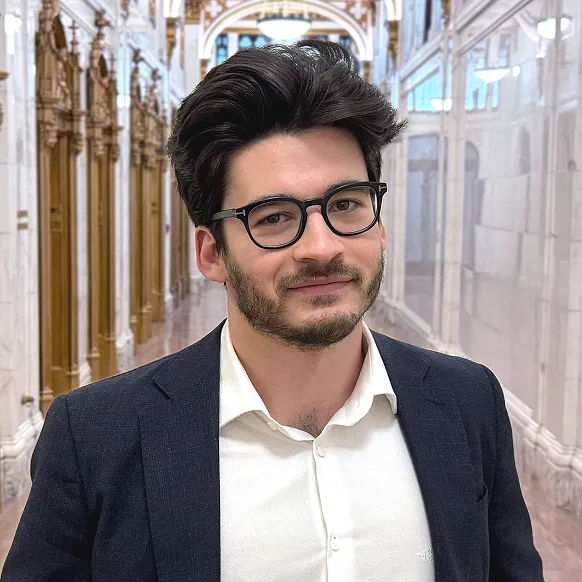
• Leads global market expansion, customer engagement, and strategic partnerships for Standard Carbon.
• Maverick in energy deal-making and regulatory-driven markets
• Aligns commercial growth with scalable, repeatable project execution across geographies.
Frequently Asked Questions
Why invest in startups?
Regulation CF allows investors to invest in startups and early-growth companies. This is different from helping a company raise money on Kickstarter; with Regulation CF Offerings, you aren’t buying products or merchandise - you are buying a piece of a company and helping it grow.
How much can I invest?
Accredited investors can invest as much as they want. But if you are NOT an accredited investor, your investment limit depends on either your annual income or net worth, whichever is greater. If the number is less than $124,000, you can only invest 5% of it. If both are greater than $124,000 then your investment limit is 10%.
How do I calculate my net worth?
To calculate your net worth, just add up all of your assets and subtract all of your liabilities (excluding the value of the person’s primary residence). The resulting sum is your net worth.
What are the tax implications of an equity crowdfunding investment?
We cannot give tax advice, and we encourage you to talk with your accountant or tax advisor before making an investment.
Who can invest in a Regulation CF Offering?
Individuals over 18 years of age can invest.
What do I need to know about early-stage investing? Are these investments risky?
There will always be some risk involved when investing in a startup or small business. And the earlier you get in the more risk that is usually present. If a young company goes out of business, your ownership interest could lose all value. You may have limited voting power to direct the company due to dilution over time. You may also have to wait about five to seven years (if ever) for an exit via acquisition, IPO, etc. Because early-stage companies are still in the process of perfecting their products, services, and business model, nothing is guaranteed. That’s why startups should only be part of a more balanced, overall investment portfolio.
When will I get my investment back?
The Common Stock (the "Shares") of Standard Carbon (the "Company") are not publicly-traded. As a result, the shares cannot be easily traded or sold. As an investor in a private company, you typically look to receive a return on your investment under the following scenarios: The Company gets acquired by another company. The Company goes public (makes an initial public offering). In those instances, you receive your pro-rata share of the distributions that occur, in the case of acquisition, or you can sell your shares on an exchange. These are both considered long-term exits, taking approximately 5-10 years (and often longer) to see the possibility for an exit. It can sometimes take years to build companies. Sometimes there will not be any return, as a result of business failure.
Can I sell my shares?
Shares sold via Regulation Crowdfunding offerings have a one-year lockup period before those shares can be sold under certain conditions.
Exceptions to limitations on selling shares during the one-year lockup period:
In the event of death, divorce, or similar circumstance, shares can be transferred to:
• The company that issued the securities;
• An accredited investor;
• A family member (child, stepchild, grandchild, parent, stepparent, grandparent, spouse or equivalent, sibling, mother-in-law, father-in-law, son-in-law, daughter-in-law, brother-in-law, or sister-in-law, including adoptive relationships).
What happens if a company does not reach their funding target?
If a company does not reach their minimum funding target, all funds will be returned to the investors after the close of the offering.
How can I learn more about a company's offering?
All available disclosure information can be found on the offering pages for our Regulation Crowdfunding offering.
What if I change my mind about investing?
You can cancel your investment at any time, for any reason, until 48 hours prior to a closing occurring. If you’ve already funded your investment and your funds are in escrow, your funds will be promptly refunded to you upon cancellation. To submit a request to cancel your investment please email: info@dealmakersecurities.com
How do I keep up with how the company is doing?
At a minimum, the company will be filing with the SEC and posting on its website an annual report, along with certified financial statements. Those should be available 120 days after the fiscal year end. If the company meets a reporting exception, or eventually has to file more reported information to the SEC, the reporting described above may end. If these reports end, you may not continually have current financial information about the company.
What relationship does the company have with DealMaker Securities?
Once an offering ends, the company may continue its relationship with DealMaker Securities for additional offerings in the future. DealMaker Securities’ affiliates may also provide ongoing services to the company. There is no guarantee any services will continue after the offering ends.
What kind of shares are you issuing?
COMMON
Where can I find the company’s SEC filings?
All of Issuer’s regulatory filings, including financial reports, can be found here: SEC EDGAR LINK
How much are you raising?
$5,000,000.00
How will I get a return on my investment?
A. Investing in startups is risky and there is no guarantee you will get a return on your investment. However, an exit opens up the opportunity where you could convert your shares into cash or a more liquid asset. Exits include going public, getting acquired by a larger company, or our company buying back shares. If the value of our company grows, then you have a higher potential of making a profit on your investment during one of these exits.
B. You are investing in a pre-revenue company. Success will be measured in progress towards revenue. Future liquidation events could include acquisition or an IPO.
When will I receive my shares?
Shares will be rewarded after the investment funds clear. This typically takes around 3 weeks after investment.
Are there higher fees if you invest via credit card vs. ACH?
No, costs are the same, regardless of how you invest.
How Will I (Investor) Make Money?
As the company grows in revenue and value, your investment grows along with it through your percentage ownership in the company. As Standard Carbon continues to scale deployments and expand revenue streams, investors benefit from the increasing value of the business. In the event of a future liquidity event such as an acquisition, strategic partnership, or public offering, investors would participate in the value created through that growth.
How Do I Know People Will Buy This Solution?
They already are. We have active discussions, proposals, and early project commitments underway with building owners, utilities, and energy market participants. As we continue investing in our sales, marketing, and project development teams, we expect this pipeline to expand significantly as more organizations seek reliable, low-carbon energy solutions.
Are There More Opportunities Ahead?
Yes, absolutely. We believe crowdfunding aligns perfectly with our mission to democratize energy production and create a circular energy economy. Our technology allows energy to be produced closer to where it is used, reducing emissions while keeping energy revenue within local communities. This creates significant opportunities for expansion across many cities and markets.
Why Didn't a Bigger Company Do This Already?
Large energy companies often focus on large centralized infrastructure. Our approach began by focusing on smaller, distributed systems that can be deployed closer to the point of energy use. That focus allowed us to innovate faster and build a scalable platform. As the market grows, we are already in discussions with larger companies about partnerships that could accelerate deployment of our technology.
How do you plan to use the proceeds from this funding round?
The proceeds from this funding round will be used to continue building the parent company and accelerate project development. This includes expanding our sales and marketing efforts, advancing engineering and project development, strengthening operational capabilities, and supporting the commercialization of our technology to drive revenue growth.
What is the current valuation of the Company?
The company is currently valued at approximately $40 million.
Why Should I Invest?
Investing in Standard Carbon provides an opportunity to participate in a company focused on transforming waste carbon emissions into usable energy. Our technology is supported by strong scientific foundations and addresses a major global challenge: the need for cleaner, locally produced energy. As governments, utilities, and industries move toward decarbonization and energy resilience, we believe Standard Carbon is positioned to play a meaningful role in that transition.
How long are you expecting the company to operate before needing another round?
If we are able to raise the full amount in this round, we expect it to support significant growth over the next two years as we continue building our project pipeline and expanding our commercial operations. As the company grows, additional capital may be raised in the future to further accelerate market expansion and project development.
What is the exit plan for the company?
Our primary focus is building a strong, valuable, and successful company. Over time, potential exit opportunities could include a strategic acquisition, merger with a larger energy company, or an initial public offering. As the company grows and demonstrates market traction, one of these paths could provide liquidity for investors while strengthening the long-term impact of our technology.
What industries are you currently focused on?
We are currently focused on urban energy markets and industrial or commercial energy users, including power plants, particularly peaker plants. These markets present immediate opportunities for deployment. While our addressable market is very large, we remain disciplined in our initial focus. In the near future we also expect to expand into powering data centers, and we are already in discussions in that sector.
How many investors do you have already?
We currently have a mix of more than 50 individual and institutional investors who have supported the company over the past several years.
Will you be paying out dividends to investors?
Our primary focus is reinvesting in growth during the early stages of the company. However, as projects mature and generate stable revenue, we anticipate the potential to distribute dividends to shareholders when appropriate.
What’s the Company's core business?
Our core business is converting waste carbon emissions into usable natural gas fuel. We capture carbon emissions from point sources such as industrial facilities and convert them into renewable natural gas that can be used for power generation or distributed through existing energy infrastructure.
Where are your headquarters located?
Our headquarters are located in New York City, with engineering and R&D operations based in Israel.
How many employees does your Company have?
We currently have fewer than 18 employees (with a mix of full-time and part-time employees, supported by trusted external vendors) and plan to expand our team as we grow revenue and accelerate project development.
When will the Company expand into additional markets and which ones?
We are already beginning that process. We are currently in discussions and have submitted proposals in many additional U.S. markets including Boston, D.C., Upstate NY, VA, Texas, and California and other areas. Internationally, we have also received interest from London, Paris and are evaluating the timing of a European office to support opportunities across the UK and EU.
Do you plan to expand internationally?
Absolutely. International expansion is a key part of our long-term strategy as many global markets are actively seeking scalable low-carbon energy solutions.
Can you share the roadmap for the next 3-4 years and when you expect to become profitable?
We operate in a capital-intensive industry where projects are typically financed at the project level. Our model allows the parent company to generate revenue through technology licensing, engineering services, management fees, and ownership participation in projects while financing the infrastructure off balance sheet. Over the next three to four years our goal is to deploy as many projects as possible to establish market leadership, build recurring revenue streams, and scale our operating platform.
Do you plan on licensing your technology?
Yes. Technology licensing represents one of several potential revenue streams, particularly as our technology becomes more widely adopted across multiple markets.
How many patents do you have? We currently have more than 10 patents and patent applications worldwide covering various aspects of our technology and processes.
What does your path to profitability look like?
Our strategy is built around scalable project deployment and long-term revenue streams generated from technology licensing, engineering services, project management, and ownership participation in projects. With the right strategic partners and financing structures in place, we believe this creates a clear and sustainable path to profitability.
Who are your competitors? What are your advantages against them?
Many competitors focus primarily on carbon capture for the purpose of reducing emissions. Our approach goes further by transforming carbon into a usable energy product. This allows us to create value from emissions while producing dispatchable energy, which gives us a unique position in the market.
Who is the main audience target for your product/service?
Any organization that consumes significant amounts of energy or wants to produce energy locally. This includes industrial facilities, power plants, commercial buildings, municipalities, utilities, and emerging sectors such as data centers.
Are you looking to partner with other companies?
Yes. Strategic partnerships are an important part of our growth strategy, and we actively collaborate with engineering firms, utilities, developers, and project financiers.
What have been the main challenges in developing your service/product and how have they been mitigated?
Like many breakthrough technologies, development involved overcoming significant engineering and operational challenges. Our team approached these challenges through rigorous testing, collaboration with leading engineers and researchers, and a culture focused on continuously solving problems. Through persistence and innovation, we achieved the performance levels necessary to commercialize the technology.
What is Standard Carbon's pre-money implied valuation?
Standard Carbon's pre-money implied valuation is $40,000,000. The implied valuation was calculated by multiplying the total number of shares outstanding (TSO) by the price per share offered in this raise. This is a pre-money implied valuation — meaning it reflects the company's value before any new funds raised in this offering are added.